
If you close your eyes and think of the word “Jazz,” you probably hear a saxophone. But if you keep your eyes open and try to picture Jazz – specifically the golden, smoky, sweating energy of New York City in the 1940s – you are almost certainly picturing a photograph by William Paul Gottlieb.
You know the images. You have seen them on a thousand vinyl reissues, in Ken Burns documentaries, and on the walls of galleries and cafes from Tokyo to Paris.
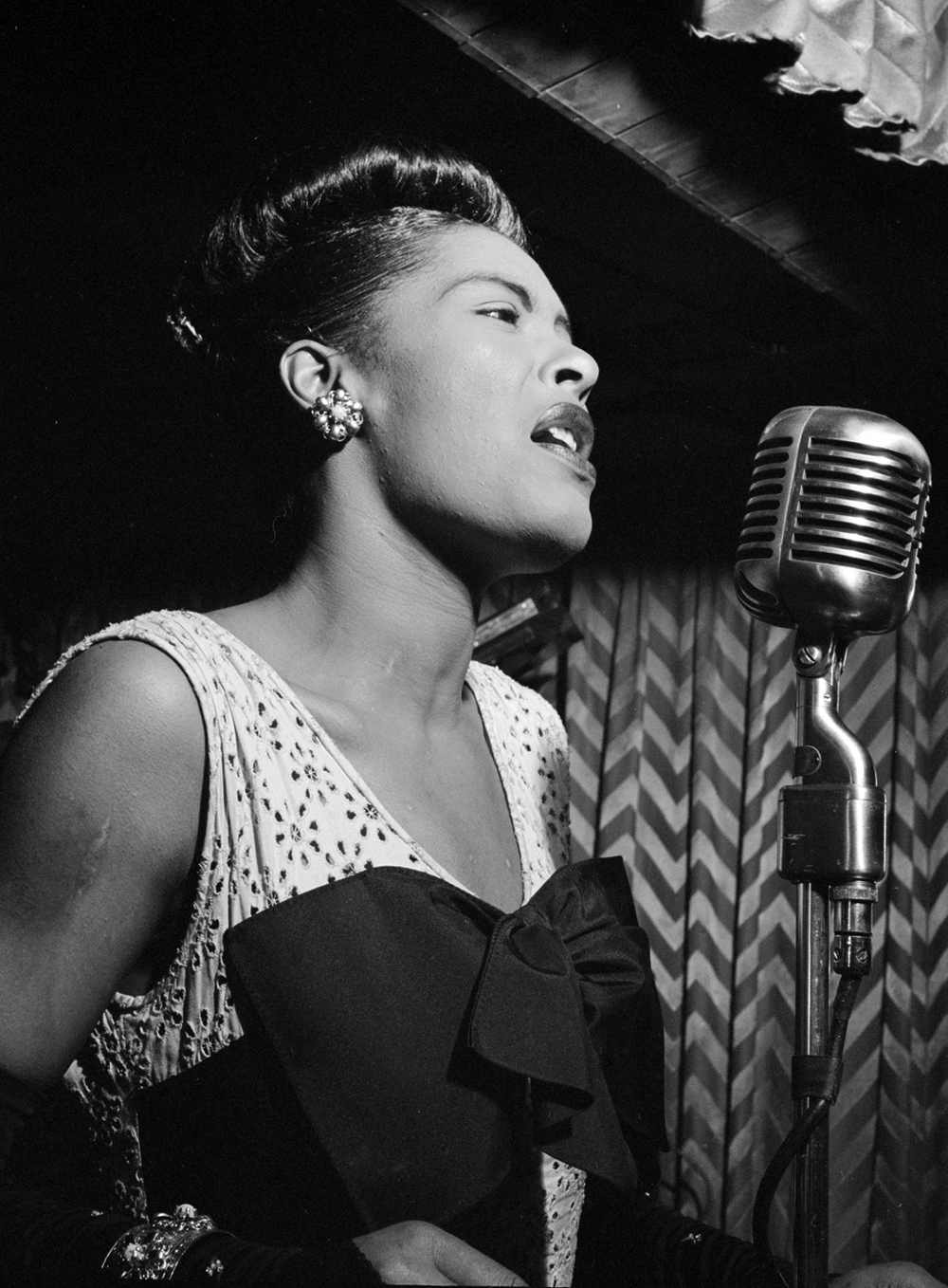
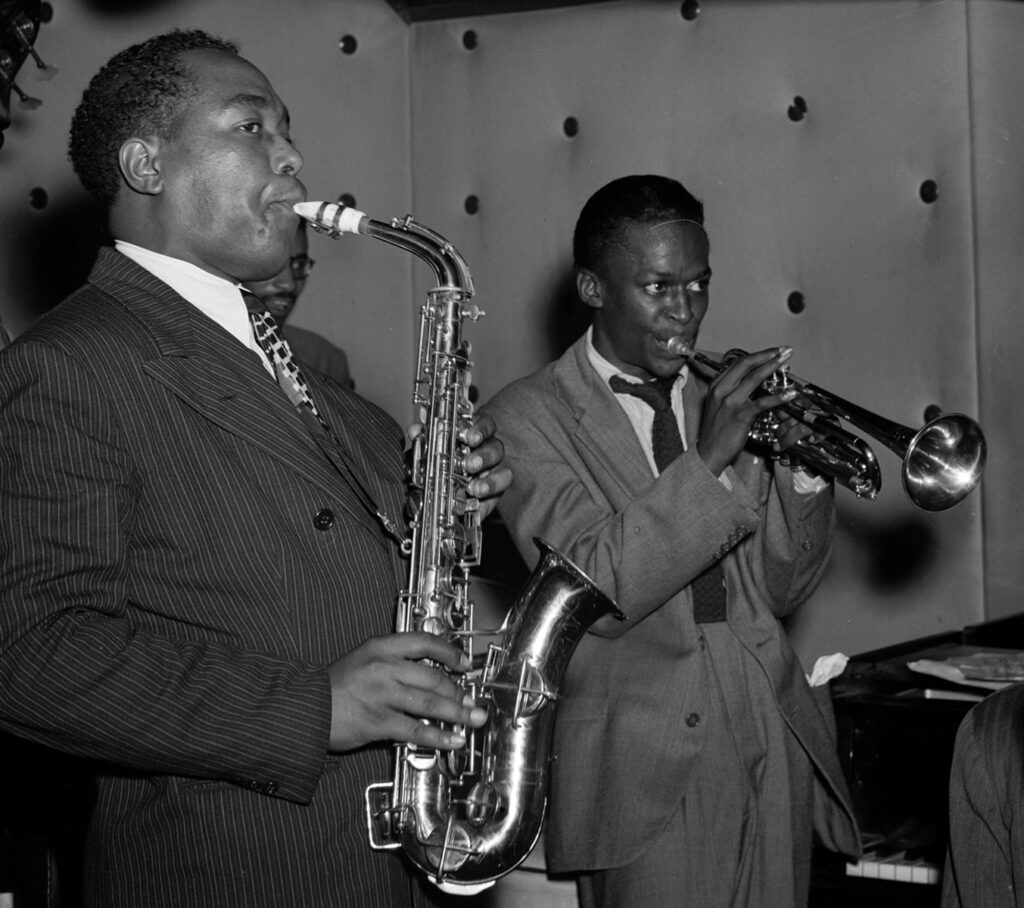
There is Billie Holiday, head tilted slightly upward, mouth open mid-note, singing into a microphone that looks like a heavy chrome monument to her voice. There is Dizzy Gillespie, cheeks puffed out like a bullfrog. There is Charlie Parker on his saxophone with a young Miles Davis at his trumpet beside him, captured in the moment of creation on a cramped club stage.
These images are so ingrained in our cultural consciousness that they feel less like photographs and more like memories. They are the visual soundtrack to the American century.
But the man who took them wasn’t a high-art photographer chasing a gallery show. He wasn’t an avant-garde experimenter like Man Ray or a social documentarian like Walker Evans. Gottlieb was a man trying to save a buck on a column he wrote for the newspaper. He was a guy with a heavy camera and a pocket full of flashbulbs, working the beat on 52nd Street before the lights went out.
The Accidental Photographer
The story of how we got the most important visual archive of the Golden Age of Jazz is, fittingly, a story about economics.
In 1938, Gottlieb was a young student at Lehigh University, obsessed with the new sounds coming out of the radio. By the time he landed a job at The Washington Post shortly after, he managed to talk his editor into letting him write a weekly jazz column. It was a hard sell, jazz was still considered by many “serious” people to be low-brow, noisy entertainment. But Gottlieb was persistent. He wanted to preach the gospel of Swing.
There was just one problem: The Post wasn’t willing to pay a staff photographer to follow a twenty-something kid around to smoky nightclubs at 2:00 AM to take pictures of musicians.
Gottlieb knew that a column without pictures was a column nobody read. Faced with the prospect of his weekly feature being a wall of gray text, he made a pragmatic decision: he acquired a 31/4-inch by 41/4-inch Speed Graphic press camera, film and flashbulbs. Post photographers taught him the rudiments of picture-taking.
This was not a user-friendly machine. It was a beast. It was the standard camera for pressmen in the 1940s, a box of wood, leather, and metal that used large-format sheet film. You didn’t just “point and shoot.” You had to load a film holder, pull the dark slide, cock the shutter, focus, fire the flash, replace the dark slide, flip the holder, and do it all again. It was slow. It was loud. And it was expensive to operate.
Gottlieb wasn’t trained in lighting. He learned by doing. He learned that if he didn’t hold the camera steady, the vibration of the bass drum would blur the shot. He learned that flashbulbs cost money, so he couldn’t afford to waste them.
This financial constraint became his defining aesthetic. He didn’t have the budget to shoot twenty frames of a single subject. He often had two flashbulbs per night. That meant he had two chances to capture the soul of Duke Ellington or Cab Calloway. When you only have one shot, you don’t shoot until you see the truth. You wait. You watch the musician breathe. You wait for the sweat to roll down their temple. You wait for the crescendo.
The King of Swing Street
To understand Gottlieb’s work, you have to understand his studio. His studio was New York City, specifically one legendary block of West 52nd Street.
They called it “Swing Street” or “The Street That Never Sleeps.” In the 1940s, this single city block was the center of the musical universe. It was lined with brownstones that had been converted into cramped, smoky nightclubs: The Onyx, The Three Deuces, The Famous Door, Kelly’s Stable, The Spotlite.
These weren’t grand concert halls. They were basements. They were long, narrow rooms (“shoeboxes,” the musicians called them) where the stage was barely a foot off the ground and the front row tables were so close that the drummer’s sweat would hit your martini.
Gottlieb was a fixture there. He wasn’t an outsider looking in; he was part of the furniture. The musicians knew him. They trusted him. He wasn’t looking for a scandal; he was looking to celebrate the music. This access allowed him to get impossibly close.
The Architecture of the Frame
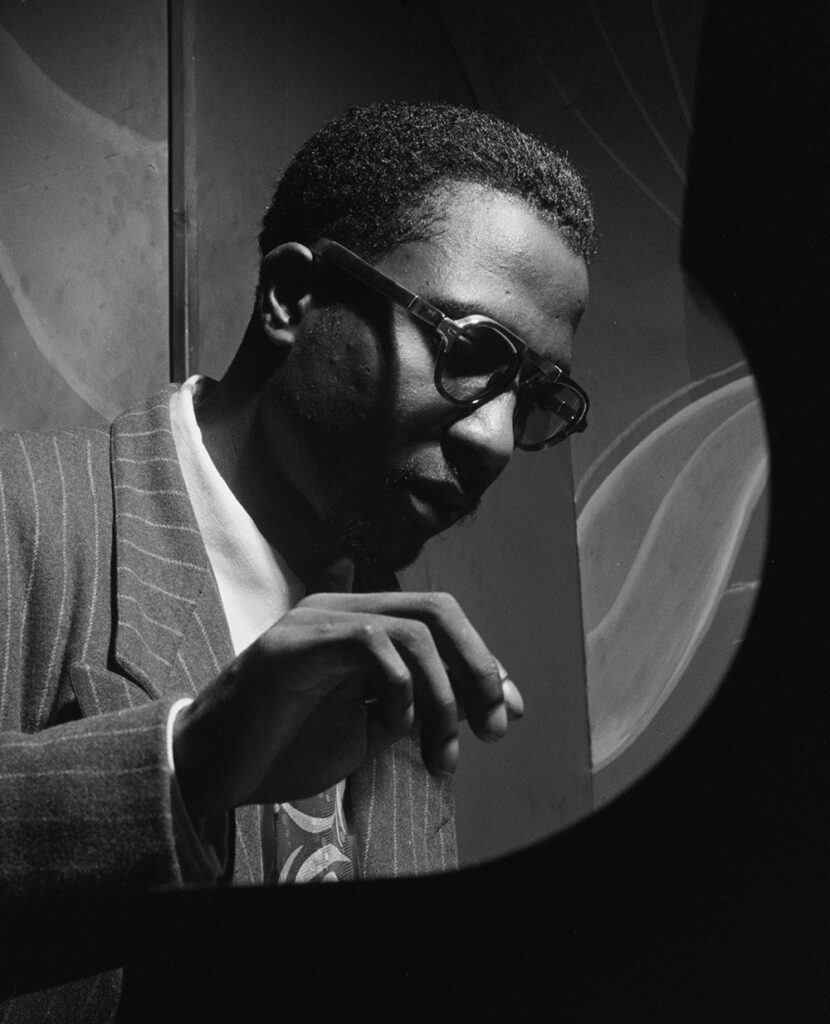
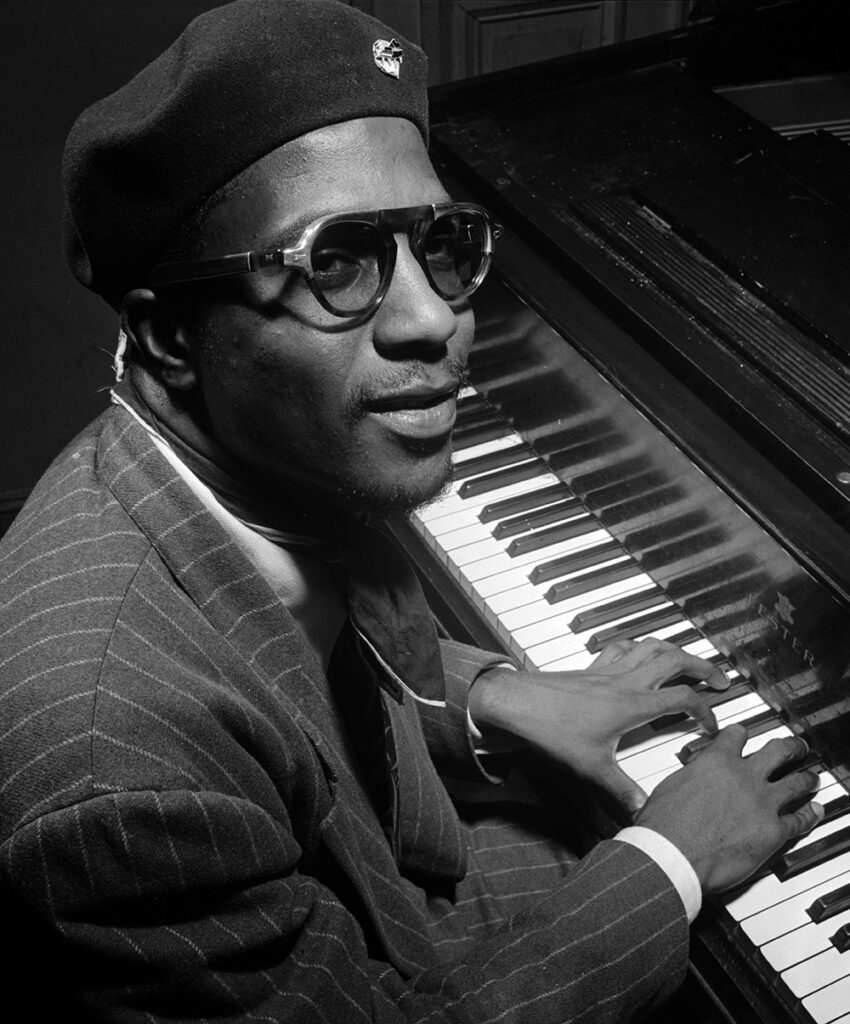
Gottlieb’s portraits of Thelonious Monk show the full range of this approach – not just documenting a musician, but interpreting the music through composition.
In one shot, Gottlieb positions himself above and shoots downward. Monk looks up at the camera with an expression that’s both watchful and slightly amused, wearing his signature pinstripe suit and thick-framed glasses.
In another image, shot from a lower angle, Monk is looking down at his hands on the keys, completely absorbed. Gottlieb didn’t ask him to look up; he captured pure concentration, the moment between thoughts. The dramatic lighting carves Monk’s face out of shadow, emphasizing the sharp angles of his profile. These photos tell you everything you need to know about Monk’s music: it is angular, intellectual, and deeply stylish – even at rest, coiled with tension.
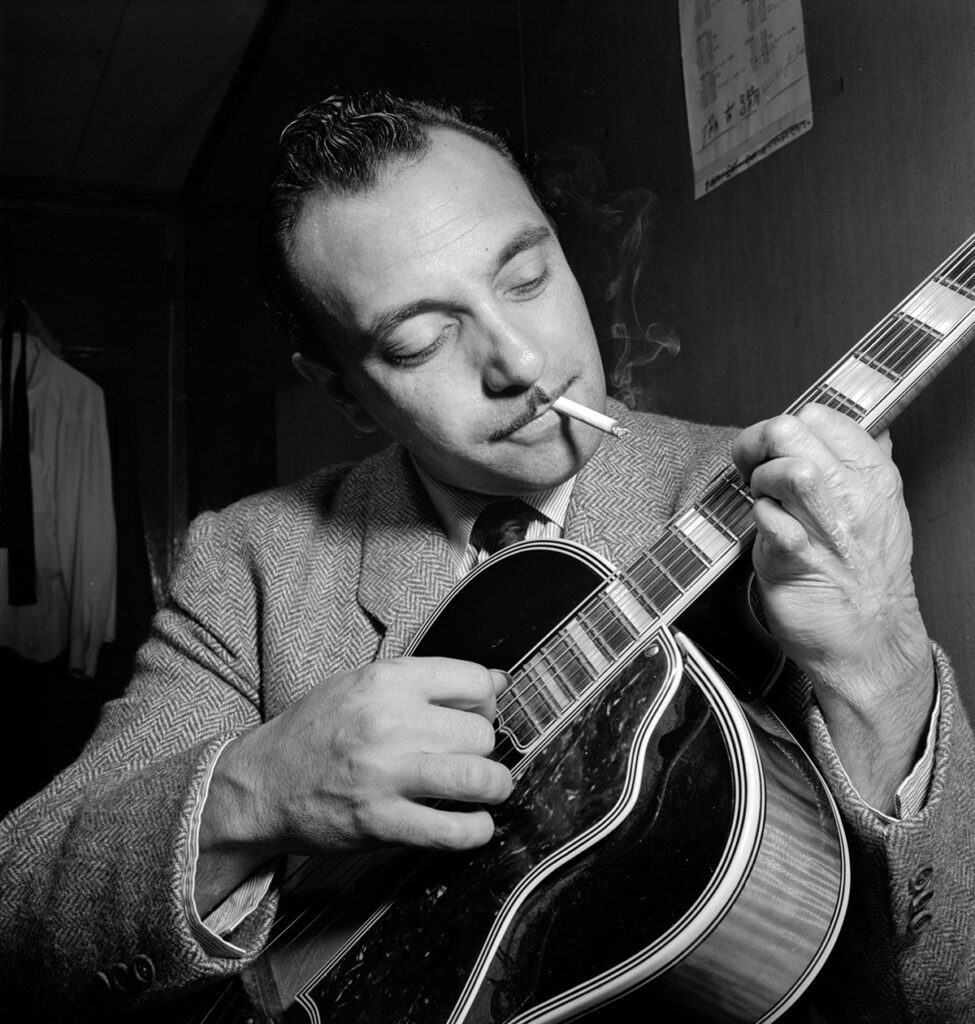
He applied this same reverence to Django Reinhardt. Gottlieb focused on the hands, the two-fingered “Gypsy” style that changed guitar playing forever. Django is looking down at his fretboard, a cigarette dangling from his lips, completely unaware of the camera. It’s an honest, quiet moment that celebrates the triumph of art over physical circumstance.
The “Noir” Aesthetic
Gottlieb’s style is often described as “Film Noir.” The high contrast, the deep shadows, the swirling cigarette smoke – it all looks like a scene from a Bogart movie.
But this wasn’t an affectation; it was a necessity. He was shooting in dark rooms with a single flash. He learned to position his flash gun off-camera to create sculpting shadows. He used the darkness to hide the cluttered backgrounds of the clubs, the dirty dishes and distracted patrons. By letting the background drop into a black void, he made the musician the only thing in the universe.
When he photographed Charlie Parker and Miles Davis performing together at the Three Deuces, he captured bebop’s creative engine in action. Parker on saxophone, Davis on trumpet, both mid-phrase, instruments raised, completely absorbed in the music. There’s no posing, no acknowledgement of the camera, just two musicians locked into the same improvisation, the young Davis already holding his own beside the master.
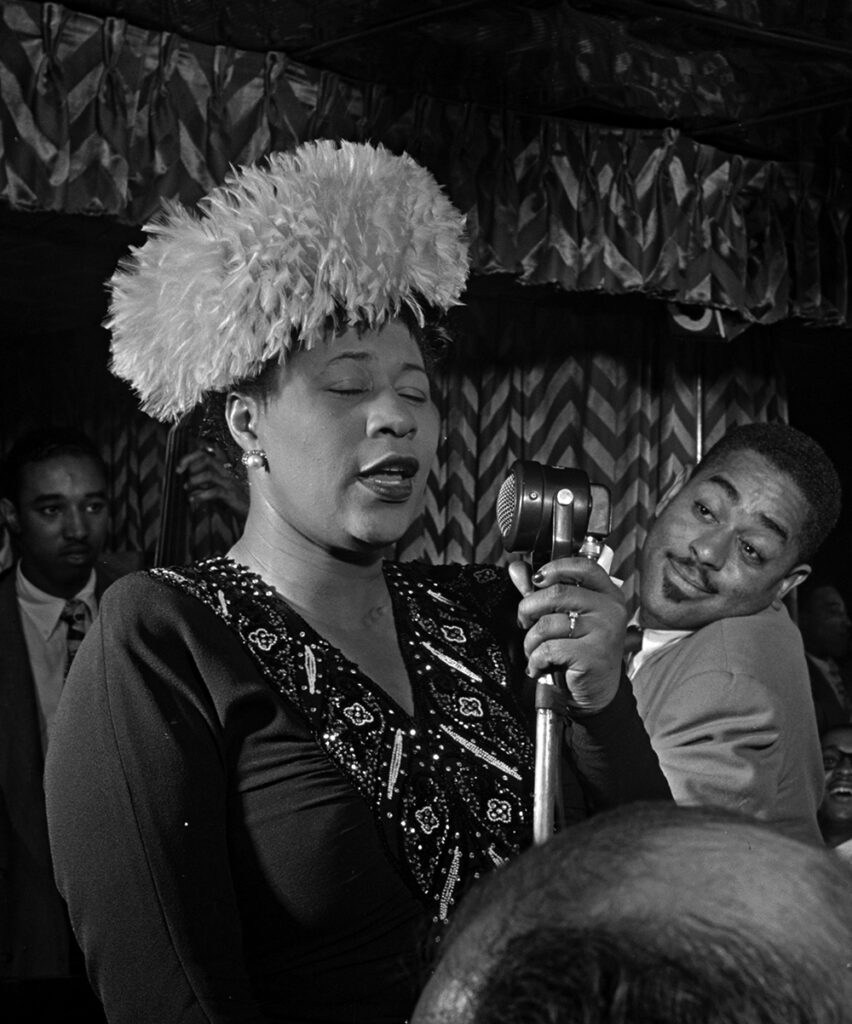
Despite the “Noir” reputation, Gottlieb also captured the communal, sometimes intense reality of the scene. In a dynamic shot with Ella Fitzgerald and Dizzy Gillespie, Gottlieb captures the playful energy backstage. Ella, wearing an elaborate feathered headdress, is caught mid-performance with her mouth open in song. Behind her, Dizzy leans in close with a wide grin, his expression one of delight and admiration. It captures the joy and camaraderie of the jam session – you can’t hear the notes they’re singing, but you can feel the connection.
The Golden Decade and the Resurrection
Gottlieb only photographed the jazz scene for ten years (1938-1948). He was there for the end of Swing and the birth of Bebop. And then, he stopped.
By 1948, the scene was changing. 52nd Street was being torn down for office buildings, and the drugs were taking a toll on the musicians he loved. He had a family to support, so he took a job at an educational filmstrip company. The man who had documented the coolest people on the planet spent the next several decades making slideshows for schools.
His negatives sat in filing cabinets for years, nearly forgotten. But as the giants of jazz began to pass away, people realized what Gottlieb had done. He hadn’t just taken pictures; he had built a time machine.
In his later years, he saw his work hung in the National Portrait Gallery. He eventually ensured that his images would enter the public domain, ensuring they would belong to the history of the music forever.
Why It Still Matters
We live in an era of high-definition, perfectly retouched, endlessly filtered photography. We are used to seeing musicians styled by teams of professionals, lit by complex rigs, and photoshopped into perfection.
Gottlieb’s photos are the antidote to that. They are gritty. They are raw. Sometimes the focus is a little soft. Sometimes the framing is a little crooked. But they are undeniably real.
Gottlieb understood that jazz is a physical act. It involves breath, sweat, spit, and muscle. It involves calloused fingers on guitar strings and lips pressed against brass. He didn’t shy away from the physicality. But he also understood the quieter moments – the preparation, the exhaustion, the humanity behind the performance.
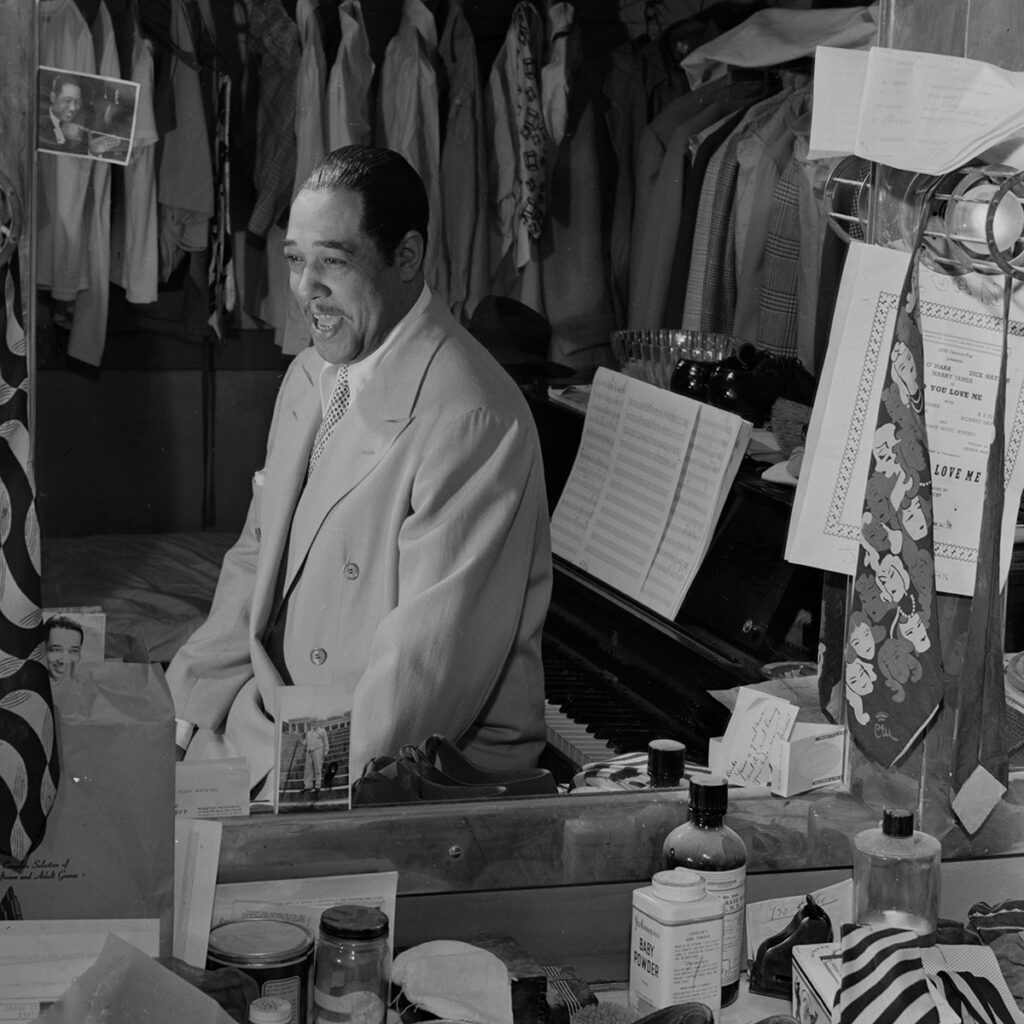
Behind the scenes, Gottlieb captured a different intimacy. In Duke Ellington’s dressing room, the bandleader sits at his piano surrounded by the chaos of touring life – suits hanging on racks, sheet music scattered about, bottles of hair tonic on the vanity. Duke looks at the camera with an easy smile, relaxed in his element. It’s not the maestro on stage; it’s the working musician between sets.
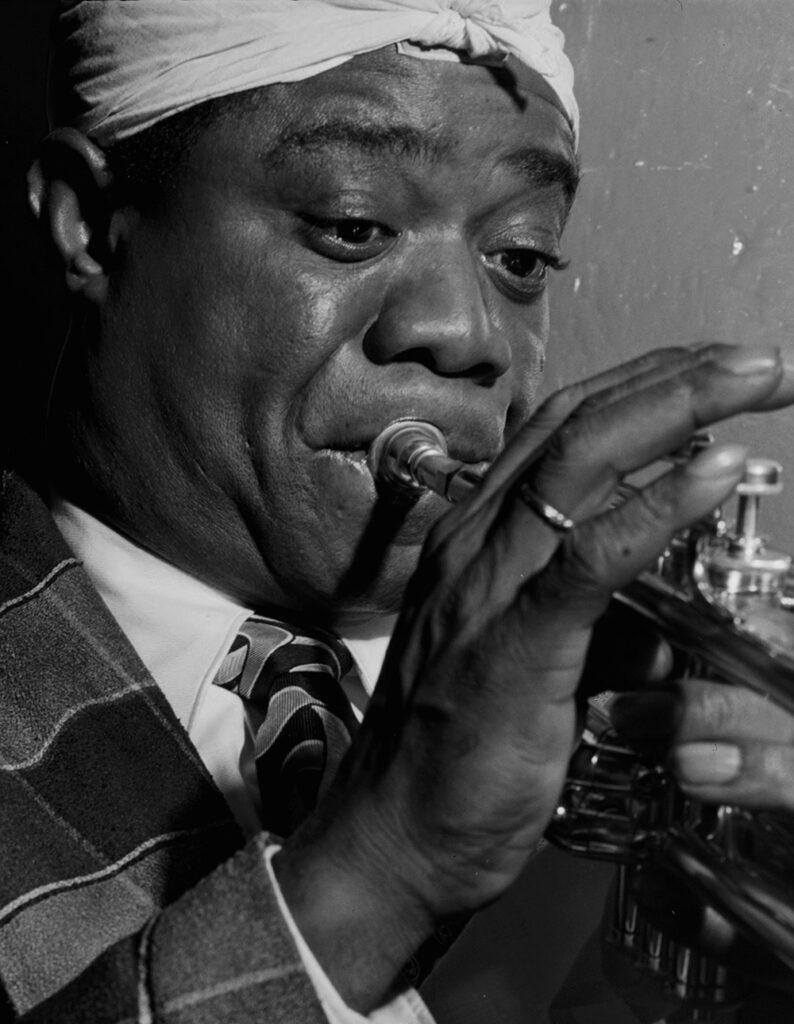
On stage, the intensity was different. There is Louis Armstrong mid-performance, trumpet pressed to his lips, bandana and patterned tie visible in extreme closeup. You can see the concentration, the texture of his skin. Not the grinning ‘Satchmo’ persona, this is Armstrong the craftsman at work.
The Final Set
Bill Gottlieb passed away in 2006, but in a very real way, he is still dictating how we see the 20th century.
Every time a director films a scene in a jazz club and fills it with smoke and shadows, they are trying to recreate a Gottlieb photograph. Every time a young trumpet player puts on a suit and tilts their horn just so, they are unconsciously mimicking a pose Gottlieb captured 70 years ago.
He was the ultimate fan. He loved the music so much that he couldn’t bear the thought of it disappearing into the air. He realized that while you can record the sound on wax, you couldn’t record the feeling of being in the room.
So he built a time machine out of a Speed Graphic camera and a flashbulb.
And today, eighty years later, the machine still works. You look at the photo, and you are there. You can smell the stale beer and the cigarettes. You can hear the ice clinking in the glasses. You can feel the thump of the upright bass in your chest.
The band is playing. The night is young. And Bill Gottlieb has just raised his camera for one last shot.